


Audio‑visual technology is evolving faster than ever. With 8K displays, virtual reality (VR), and immersive collaboration tools becoming more accessible, businesses are beginning to explore how these technologies can enhance communication, training, and customer engagement.
However, adopting next‑generation AV isn’t just about buying new screens or headsets. It requires robust, future‑ready infrastructure. Without the right foundations in place, performance issues, security risks, and costly rework can quickly arise.
The Next Generation of AV Technology
Traditional AV setups were designed for standard meeting rooms and basic video conferencing. Today’s environments demand far more, ultra‑high‑resolution visuals, real‑time rendering, and low‑latency experiences.
As 8K and VR technologies mature, they are moving beyond niche applications and into mainstream business use. Organisations that plan ahead will be better positioned to adopt these technologies without disruption.
What’s Driving the Move to 8K and VR?
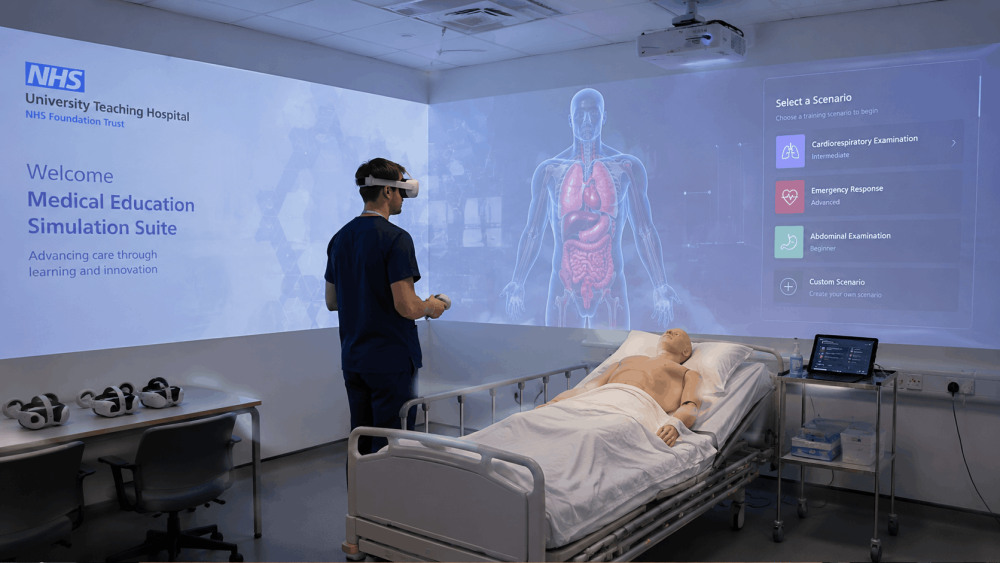
Several factors are accelerating the adoption of high‑performance AV:
- Improved visual clarity for large meeting rooms and digital signage
- Immersive training and simulation using VR and AR
- Enhanced design and visualisation for architecture, engineering, and manufacturing
- More engaging collaboration for remote and hybrid teams
As expectations grow, businesses need AV systems that can deliver exceptional performance consistently.
Understanding the Infrastructure Requirements
High‑resolution and immersive AV workloads place significant demands on underlying infrastructure.
Key considerations include:
- Increased bandwidth and data throughput
- Low latency for real‑time VR experiences
- Sufficient processing power and GPU capability
- Adequate power, cooling, and physical space
- Compatibility with existing IT and AV environments
Future‑proofing starts with understanding these requirements and planning accordingly.
Network Readiness: Bandwidth, Latency, and Reliability
The network is the backbone of modern AV. 8K video streams and VR workloads can consume substantial bandwidth and are highly sensitive to latency.
Best practices include:
- Using high‑speed wired connections where possible
- Planning for 10GbE and beyond in high‑performance environments
- Implementing Quality of Service (QoS) to prioritise AV traffic
- Segmenting AV networks to improve performance and security
A resilient network ensures smooth, uninterrupted AV experiences.
Cabling and Connectivity Considerations
Cabling decisions have a long‑term impact on scalability and performance.
Important factors include:
- Choosing the right interfaces (HDMI, DisplayPort, USB‑C, SDI)
- Understanding cable length limitations and signal degradation
- Using fibre cabling for long‑distance or high‑bandwidth requirements
- Designing structured cabling that supports future expansion
Cutting corners on cabling often leads to costly upgrades later.
AV Hardware and Display Technology
Not all AV hardware is created equal. Future‑proof environments rely on equipment designed to support emerging standards.
Key considerations:
- Selecting 8K‑ready displays and projectors
- Ensuring media players and compute devices have adequate GPU power
- Choosing VR headsets that integrate with existing platforms
- Prioritising interoperability and standards compliance
Hardware choices should support both current needs and future growth.
Cloud, Edge, and Processing Strategies
Processing requirements for high‑performance AV can be met in different ways.
Options include:
- On‑premise processing for maximum control and low latency
- Edge computing to support real‑time rendering close to users
- Cloud‑based services for scalability and flexibility
- Hybrid approaches that balance cost and performance
The right strategy depends on workload demands, budget, and security requirements.
Security and Data Protection in High‑Performance AV
As AV systems become more connected, they also become potential security risks.
Future‑proof AV design should include:
- Secure configuration of AV devices and networks
- Strong identity and access controls
- Regular firmware and software updates
- Data protection measures for immersive and collaborative environments
Security must be embedded into AV infrastructure from the start.
Planning for Scalability and Longevity
Future‑proofing isn’t about predicting every technology trend, it’s about designing for change.
Best practices include:
- Modular system design
- Avoiding vendor lock‑in
- Clear lifecycle and upgrade planning
- Phased investments aligned with business growth
This approach protects long‑term value and reduces risk.
Common Mistakes to Avoid
Organisations often run into issues by:
- Underestimating bandwidth and processing needs
- Treating AV as separate from IT infrastructure
- Ignoring security considerations
- Focusing on short‑term costs over long‑term value
Avoiding these pitfalls requires careful planning and expert guidance.
How The DMS Group Supports Future‑Ready AV
At The DMS Group, we help businesses design AV environments that are built for today and ready for tomorrow.
Our services include:
- AV and infrastructure assessments
- Network and cabling design
- Secure integration of AV and IT systems
- Ongoing support and managed services
We take a holistic approach to ensure performance, security, and scalability.
Getting Started with a Future‑Ready AV Strategy
The first step is understanding your current environment and future ambitions. By assessing infrastructure, identifying use cases, and creating a phased roadmap, businesses can prepare confidently for 8K and VR adoption.
Partnering with an experienced provider ensures your investment delivers long‑term value.
Investing in AV That Lasts
8K displays and VR workloads represent the future of business AV. By planning infrastructure today, organisations can avoid disruption, control costs, and unlock new possibilities for collaboration and engagement.
Future‑proofing AV isn’t just about technology, it’s about building a resilient, adaptable foundation for what comes next.