


When it comes to protecting sensitive information, some businesses still assume that paper records locked in a cabinet are safer than files stored online. It feels more secure because it’s physical, but that’s not always the case.
In this guide, we compare physical document storage vs cloud solutions, examining the real risks, security controls, and compliance implications of each. If your business handles confidential data, understanding the difference isn’t just about preference, it’s about risk.
The Risks of Physical Document Storage

Paper records may feel secure because they’re tangible. They can be locked away, stored in archives, and physically controlled. However, physical storage comes with its own set of document storage risks.
Loss, Theft and Damage
Paper documents are vulnerable to fire, flooding, accidental damage, and theft. Even a minor incident, such as a misplaced file or water leak, can permanently destroy records.
Limited Access Control
Locked cabinets and archive rooms offer basic protection, but access control is often broad. Once someone has a key or authorised entry, there may be no visibility into:
- Which files were accessed
- Whether copies were made
- If documents were removed
What’s more, physical access is rarely granular. A key typically provides access to everything stored within that cabinet or room, even if an individual only needs access to a small number of files.
This makes it difficult to apply the principle of “least privilege,” where access should be limited strictly to what someone needs to perform their role.
The result is wider exposure than intended, increasing both internal and external risk.
Human Error
Misfiling, incomplete records, and inconsistent naming conventions are common in paper-based systems. A document doesn’t need to be stolen to become a risk, it simply needs to be lost.
For regulated organisations, missing documentation can create compliance challenges just as serious as a breach.
No Audit Trail
One of the biggest weaknesses in any document storage security comparison is auditability.
With paper records, there is rarely a reliable way to confirm:
- Who accessed a document
- When it was accessed
- Whether it was altered or copied
For businesses subject to GDPR or industry regulations, this lack of oversight can create exposure.
Scalability and Oversight Challenges
As organisations grow, physical archives expand. Multiple sites, off‑site storage facilities, and archived boxes can make it increasingly difficult to maintain consistent control.
The more locations involved, the harder it becomes to ensure secure document storage.
Cloud Document Storage Security

Cloud storage is sometimes viewed as inherently risky because data is stored off‑site. In reality, modern cloud document storage security is built around layered protection designed specifically to reduce risk and increase oversight.
Unlike paper records, digital files can be protected, monitored and backed up automatically.
Here’s how.
Encryption by Default
Most reputable cloud platforms encrypt data:
- In transit (while it’s being sent or accessed)
- At rest (while it’s stored on servers)
This means that even if data is intercepted, it cannot be read without the correct decryption credentials.
Paper records offer no equivalent safeguard.
Role‑Based Access Controls
Cloud systems allow organisations to control exactly who can:
- View a document
- Edit it
- Download it
- Share it
Access can be restricted by department, seniority or responsibility. If an employee leaves the organisation, permissions can be revoked immediately.
This level of control is difficult to replicate with physical vs digital document storage.
Multi‑Factor Authentication (MFA)
Additional verification layers — such as authentication apps or SMS codes, significantly reduce the risk of unauthorised access.
Even if a password is compromised, access is still blocked without the second factor.
Detailed Audit Trails
One of the biggest advantages in a document storage security comparison is traceability.
Cloud systems can record:
- Who accessed a file
- When it was accessed
- What changes were made
- Whether it was shared or downloaded
This level of transparency supports compliance reporting and internal governance in a way paper systems cannot.
Automated Backup and Disaster Recovery
Cloud platforms typically include redundancy and backup across multiple secure data centres. If one location fails, data remains accessible.
By contrast, physical records damaged by fire or flooding are often irrecoverable.
Are There Risks?
Yes, but they are usually linked to configuration and governance rather than the technology itself.
Weak passwords, excessive user permissions, or lack of internal policies can undermine even the most secure system. However, when properly implemented, secure document storage in the cloud provides stronger protection, better oversight, and greater resilience than traditional paper archives.
Physical vs Digital Document Storage: A Security Comparison

When assessing physical document storage vs cloud solutions, it helps to compare them across key risk and compliance factors.
Below is a straightforward document storage security comparison highlighting how paper vs digital records security differs in practice.
| Security Factor | Physical Document Storage | Cloud Document Storage |
| Access Control | Keys, locked cabinets or archive rooms. Often broad access once entry is granted. | Role-based permissions with controlled access at user level. Permissions can be updated instantly. |
| Audit Trail | Limited or non-existent. Difficult to prove who accessed a document. | Detailed logs showing who accessed, edited, shared or downloaded files. |
| Data Protection | No encryption. Documents can be copied or removed without trace. | Encrypted in transit and at rest, protecting data from interception. |
| Disaster Recovery | Vulnerable to fire, flood, theft or deterioration. Backup copies require duplication and storage space. | Automated backups and redundancy across secure data centres. |
| Remote Access | Requires physical presence or manual copying. | Secure remote access with authentication controls. |
| Scalability | Requires additional physical space and manual organisation. | Scales without physical limitations, with centralised oversight. |
| Compliance Evidence | Manual processes required to evidence control and retention. | Built-in reporting and access logs support compliance requirements. |
In a direct physical vs digital document storage comparison, the key difference is visibility and control.
Paper records rely heavily on physical barriers and human processes. Cloud storage relies on encryption, permissions and monitoring. While both require proper governance, digital systems are designed to provide traceability and structured oversight, which are critical in regulated environments.
For organisations prioritising secure document storage, that distinction is significant.
Compliance and Regulatory Considerations
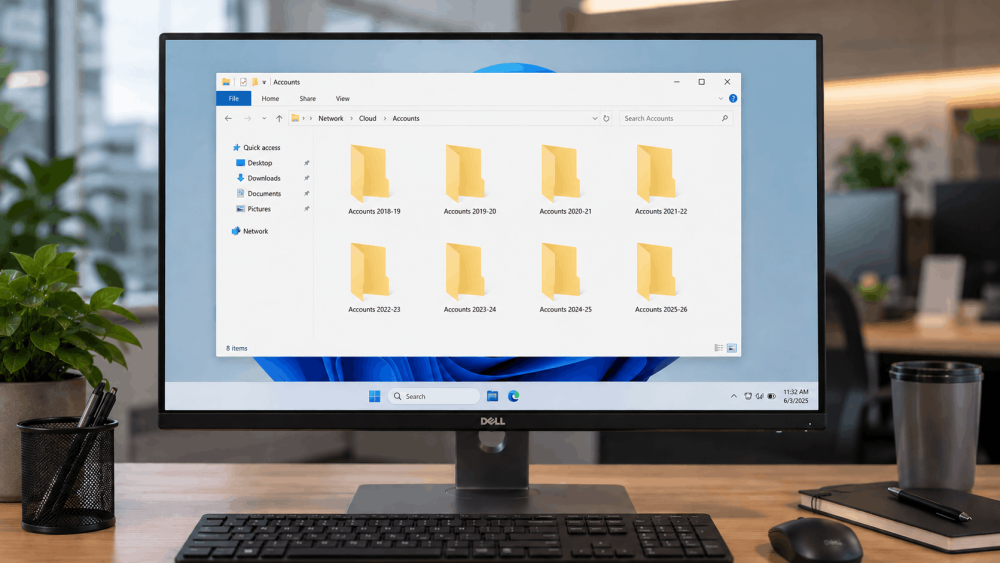
For many organisations, the question of physical document storage vs cloud isn’t just about preference, it’s about compliance.
Regulations such as GDPR require businesses to demonstrate that personal data is:
- Secure
- Access‑controlled
- Retained only as long as necessary
- Protected against loss, damage or unauthorised access
The ability to evidence these controls is just as important as having them in place.
Access Accountability
With paper records, proving who accessed a document, and when, is extremely difficult. Sign‑in sheets and manual tracking are unreliable and easy to bypass.
Cloud document storage security, when properly configured, provides automatic access logs. This creates an auditable trail that can be reviewed if concerns arise.
Data Retention and Disposal
Retention policies are often inconsistently applied in physical archives. Boxes may remain in storage long after they should have been securely destroyed.
Digital systems allow organisations to:
- Apply structured retention rules
- Automate deletion schedules
- Archive documents securely
- Demonstrate compliance with retention requirements
This reduces long‑term document storage risks linked to over‑retention.
Breach Response and Reporting
If a physical file goes missing, it may be days or weeks before the loss is discovered, if it’s discovered at all.
In a cloud environment, unusual access patterns can be flagged quickly. Access can be revoked immediately, reducing exposure and supporting faster incident response.
Demonstrating Secure Document Storage
Increasingly, regulators and clients expect businesses to show clear governance over how sensitive information is stored and accessed.
In a document storage security comparison, digital systems often make compliance easier to evidence because controls are built into the infrastructure rather than relying solely on manual processes.
For organisations operating in regulated industries, that ability to demonstrate control can be as important as the security itself.
Key Questions to Ask About Your Current Storage Setup
Whether you rely on paper records, cloud storage, or a combination of both, the real issue isn’t format, it’s control.
If you’re reviewing your approach to secure document storage, these questions can help identify potential gaps.
Access and Permissions
- Who can access sensitive documents within your organisation?
- Is access restricted based on role or responsibility?
- Can permissions be updated immediately when someone changes role or leaves?
Visibility and Auditability
- Can you see who has accessed a document and when?
- Is there a reliable audit trail in place?
- Would you be able to evidence document access during an investigation or audit?
Risk and Resilience
- What would happen if your primary storage location was damaged or inaccessible?
- Do you have reliable backups in place?
- How quickly could you recover critical records?
Retention and Disposal
- Are retention policies clearly defined and consistently applied?
- Are outdated records securely destroyed?
- Can you demonstrate compliance with data protection requirements?
Scalability and Oversight
- As your organisation grows, is your storage approach becoming harder to manage?
- Are records spread across multiple sites or departments?
- Do you have central visibility over your document estate?
If the answers to these questions are unclear, inconsistent or difficult to evidence, it may indicate elevated document storage risks.
For many organisations, reviewing physical vs digital document storage isn’t about modernising for the sake of it. It’s about reducing exposure, improving oversight, and ensuring security measures can stand up to scrutiny.
When comparing physical document storage vs cloud solutions, the difference comes down to visibility, control and resilience.
Paper records can be locked away, but they offer limited traceability, broad access control and no built-it disaster recovery.
Cloud systems, when properly configured, provide encryption, structured permissions and detailed audit trails, making secure document storage more measurable and easier to evidence.
That doesn’t remove the need for governance. Security depends on clear policies, defined access rights and consistent oversight. But digital storage gives organisations the tools to enforce those controls more effectively that physical archives alone.
For businesses looking to reduce document storage risks and strengthen compliance, moving toward a structured digital approach is often the more secure long‑term option.
You can learn more about how DMS supports organisations with secure, compliant digital storage through our Document Management Service.